

You earned the click. Now earn their attention.
Most creators aren’t spending weeks carefully planning videos.
They’re simply trying to keep their head above water. Trying to film enough, edit fast enough, stay consistent enough, and create content based on what they can realistically achieve in a week.
That pressure is exactly why the first 30 seconds matter so much.
Because when creators are stretched thin, intros often become reactive rather than intentional. The camera rolls before the story is clear. The video starts before the viewer understands why they should care.
And unfortunately, YouTube notices that quickly.
YouTube doesn’t just reward good videos anymore. It rewards videos that hold attention immediately.
If people click and leave quickly, the platform assumes something went wrong. Maybe the title overpromised. Maybe the thumbnail was misleading. Maybe the pacing was too slow. Or maybe the audience simply didn’t care enough to continue.
And once that happens, distribution slows down fast.
For creators trying to turn content into a real business, those opening moments matter far more than most people realise.
The First 30 Seconds Are About Reassurance
A viewer clicks because they’re curious. Your job in the opening seconds is to reassure them they made the right decision. That means answering three questions almost immediately:
What is this video actually about?
Too many creators delay the point. Long cinematic intros, drone shots, random montages and slow build-ups often hurt more than they help. The viewer needs clarity quickly.
What journey are they about to go on?
What challenge, transformation or story are they staying for?
If you can’t answer that within seconds, retention starts falling.
Why should you care?
Good videos create emotional investment early. That doesn’t mean fake drama or forced tension, it means giving the viewer a reason to stay. A meaningful challenge, or a visible transformation. A personal goal, maybe a question that needs answering. A payoff worth waiting for.
The best creators understand that viewers are constantly asking:
What do I get if I keep watching?
The earlier you answer that, the stronger your retention usually becomes. Can I trust this creator to deliver?
Viewers decide surprisingly quickly whether a creator feels confident, intentional and worth their time. Confused pacing, weak audio, rambling intros or unclear storytelling create friction instantly. You don’t need massive production quality, but you do need direction. The strongest openings feel like somebody taking the viewer by the hand and saying:
Here’s where we’re going, and it’s worth sticking around.
The Biggest Mistake Creators Make
Many creators believe the goal of an intro is to 'set the scene.' Usually, the goal is momentum. A strong opening creates forward motion immediately. That doesn’t mean hyperactive editing or fake energy. In fact, slower creators can have incredible retention when every second still feels intentional.
The real danger is unnecessary delay. If your video only 'gets good' after three minutes, most viewers will never see the good part.
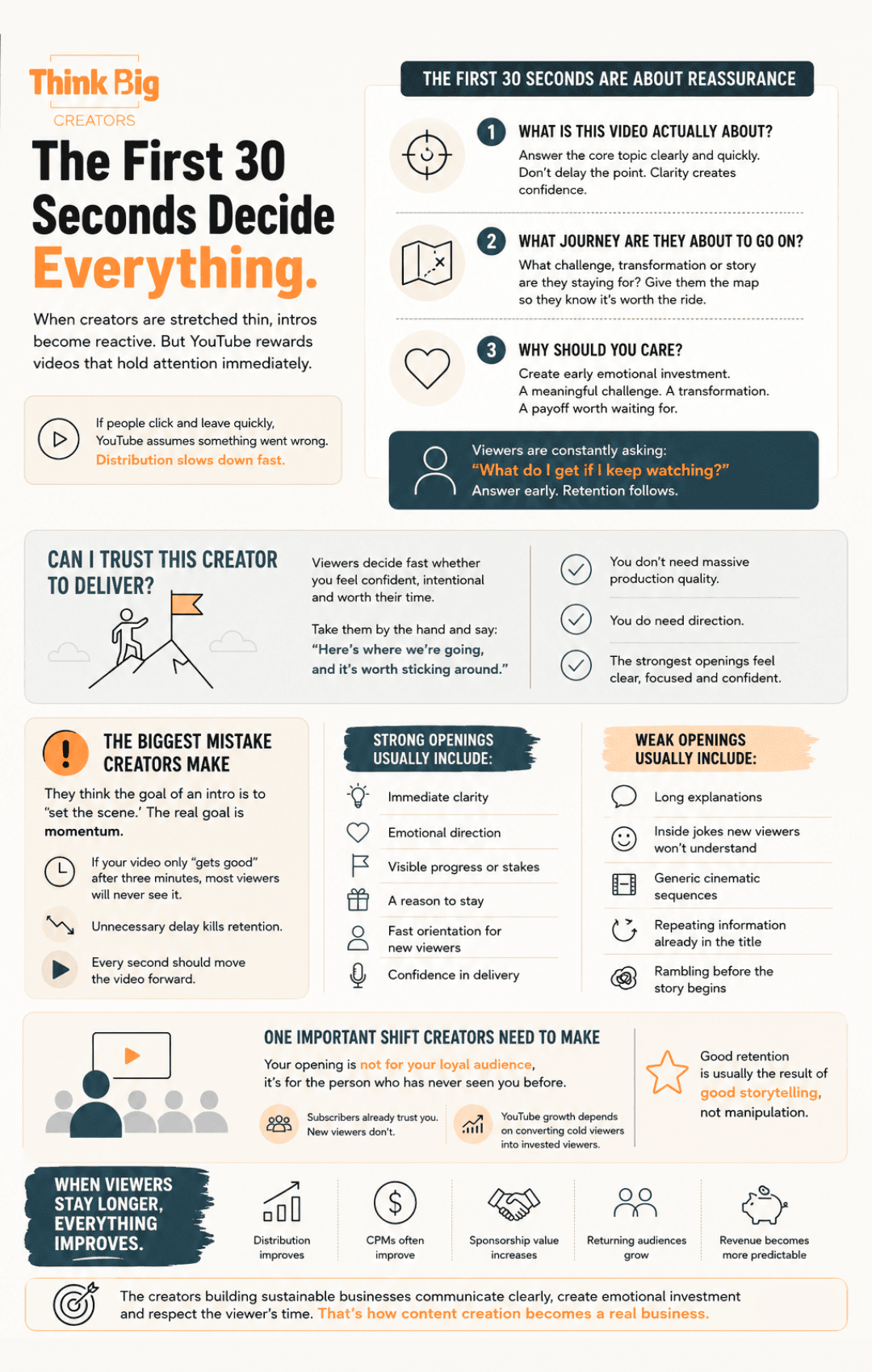
Strong Openings Usually Include:
Immediate clarity
Emotional direction
Visible progress or stakes
A reason to stay
Fast orientation for new viewers
Confidence in delivery
Weak Openings Usually Include:
Long explanations
Inside jokes new viewers won’t understand
Generic cinematic sequences
Repeating information already shown in the title or thumbnail
Rambling before the story begins
One Important Shift Creators Need To Make
Your opening is not for your loyal audience, it’s for the person who has never seen you before, your subscribers already trust you. New viewers don’t, and YouTube growth depends on converting cold viewers into invested viewers.
That’s why creators who master openings often outperform creators with objectively “better” videos. The goal isn’t retention tricks, good retention is usually the result of good storytelling not manipulation.
The creators building sustainable businesses long term are the ones learning how to communicate clearly, create emotional investment and respect the viewer’s time because when viewers stay longer:
Distribution improves
CPMs often improve
Sponsorship value increases
Returning audiences grow
Revenue becomes more predictable
And suddenly content creation starts looking less like a hobby… and more like a real business.
That’s the shift most creators are trying to make.