


What Really Happens Behind the Scene
How Agencies Choose Creators
An inside look at what really happens before a brand reaches out. Every creator has wondered the same thing.
How do brands actually choose who they work with?
If you're imagining a marketing manager scrolling Instagram and randomly deciding to send someone an email, that's almost never what happens. Behind almost every successful sponsorship is a surprisingly structured process involving agencies, spreadsheets, internal meetings, shortlists and risk assessments.
Understanding that process can completely change how you approach your content.
Let's take you behind the scenes.
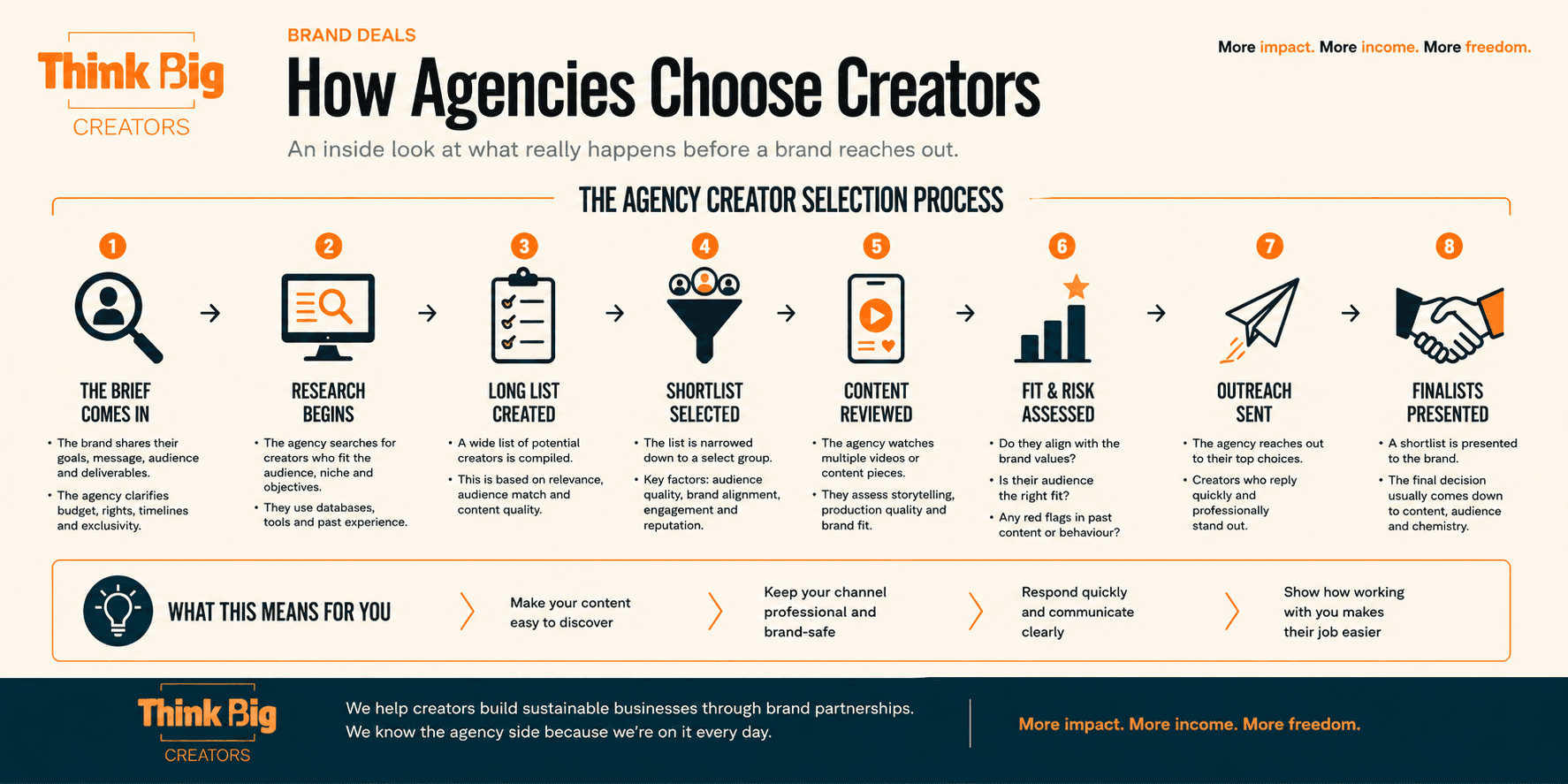
Step 1: The Brief Arrives
Every campaign starts with a brief. The brand explains what they're trying to achieve. Typically they'll include, things like campaign objectives, target audience, budget, timeline, deliverables, and other legal details like usage rights.
At this point, the agency isn't thinking about creators, they're thinking about solving a marketing problem, that's an important distinction.
The creator is the solution; not the starting point.
Step 2: The Research Begins
Once the brief is understood, the search starts, agencies don't simply look for the biggest channels, instead they're trying to answer questions like:
Who genuinely reaches this audience?
Who has worked with similar brands successfully?
Who feels authentic?
Who is currently producing high-quality content?
Who is available?
Depending on the campaign, dozens (or even hundreds) of creators may be considered.
Step 3: Building the Longlist
From that research, a longlist is created, think of this as every creator who could work, this stage isn't about finding the winner it's about making sure nobody obvious has been missed.
At Think Big, we often include creators of very different sizes at this stage because audience fit matters far more than subscriber count.
Step 4: Narrowing to a Shortlist
This is where things become competitive, the longlist quickly becomes a shortlist, agencies begin comparing creators side by side and their questions usually include:
Does this creator genuinely suit the audience?
Have they worked with too many competitors recently?
Do they align with the brand's values?
Are engagement levels healthy?
Is their content consistently good?
Many creators don't make it past this point, not because they're bad creators simply because another creator fits the campaign slightly better.
Step 5: Reviewing the Content
Before anyone gets contacted, agencies watch a lot of content, not one video, usually several. They're looking for things that viewers often don't notice. Storytelling ability, editing quality audio quality, brand integration style, consistency, personality and the creators audience relationship.
One viral video won't outweigh months of inconsistent content. Brands invest in reliability.
Step 6: Assessing Risk
This stage surprises many creators, agencies aren't only asking:
Will this creator perform?
They're also asking:
Could this creator create problems?
Risk checks may include:
Previous controversial content
Offensive language
Brand safety
Reliability
Professional communication
Missed deadlines
Previous sponsorship performance
Remember, a brand would rather choose a creator who is slightly smaller but highly reliable than someone huge who creates unnecessary risk.
Step 7: Outreach
Only now does the email arrive. If you've received a sponsorship enquiry, you've already made it through several rounds of selection. That's why responding professionally matters.
Fast replies. Clear communication. Organised answers. Professionalism after the first email often influences whether a campaign moves forward.
Step 8: Presenting the Finalists
The agency normally presents several creators to the client. Very rarely is there only one option, only then is the final decision made. Sometimes the cheapest creator wins, sometimes the biggest wins, very often, neither does, the creator who best solves the brand's problem usually gets the campaign.
What This Means For You
Once you understand this process, your priorities change. Instead of chasing subscriber milestones, focus on becoming the obvious choice when your name lands on a shortlist. Make your content easy to evaluate, if someone watches three of your recent videos, they'll quickly decide whether your quality is consistent.
Consistency Beats Occasional Brilliance.
Know your audience subscriber numbers don't tell agencies much, understanding exactly who watches your content does, the clearer your niche, the easier you are to recommend.
Stay brand-safe, you don't need to become corporate, but brands want confidence that you're professional and dependable, they are protecting their reputation as much as yours.
Reply quickly, a surprising number of opportunities disappear because creators take days to respond. Professional communication immediately builds trust.
Make the agency's job easier, this is perhaps the biggest lesson, agencies are busy. Creators who communicate clearly, deliver on time, and make campaigns straightforward become people agencies return to again and again.
Those relationships are often worth far more than a single sponsorship.
The Biggest Myth
Many creators believe sponsorships are awarded to whoever has the most subscribers. After working with hundreds of campaigns, we can tell you that's simply not true.
The creators who consistently win brand deals tend to share a different set of qualities:
They understand their audience.
They create consistently strong content.
They're easy to work with.
They communicate professionally.
They deliver what they promise.
Subscriber count might get you noticed, professionalism is what gets you hired repeatedly.
Final Thoughts
The best creators don't spend their time trying to look attractive to brands, they spend their time becoming genuinely valuable to audiences. Ironically, that's exactly what makes them attractive to brands.
If you focus on creating content people genuinely enjoy, communicate professionally, and treat your channel like a business, you'll naturally move higher up the shortlist when the right opportunity comes along.
Because that's exactly how agencies choose creators every day.